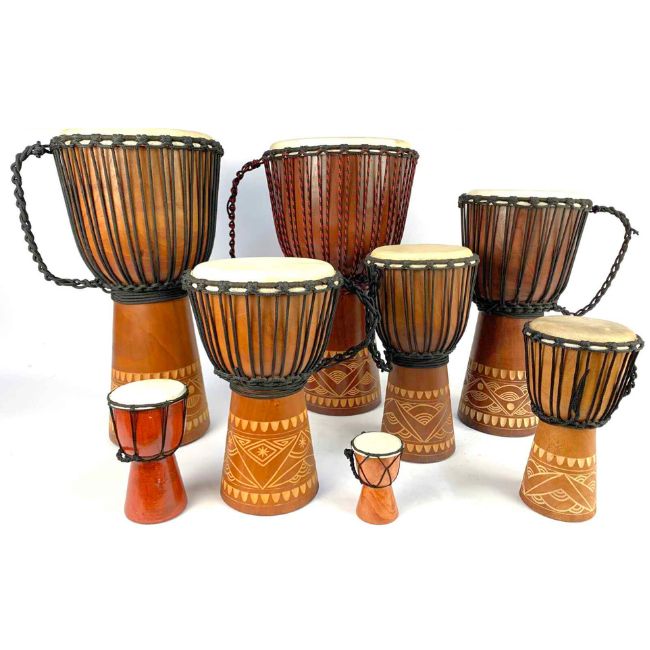
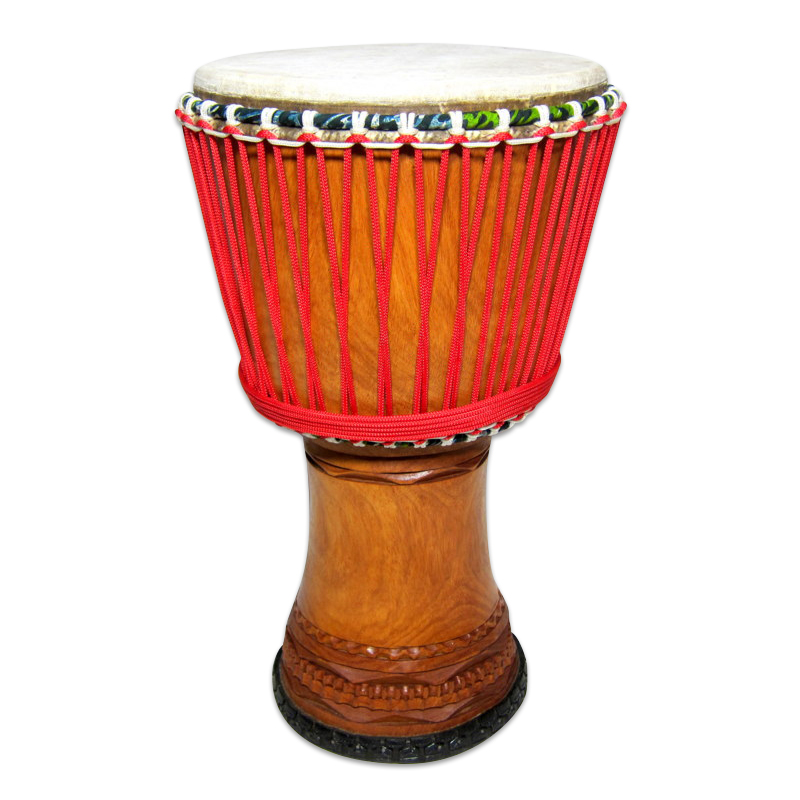
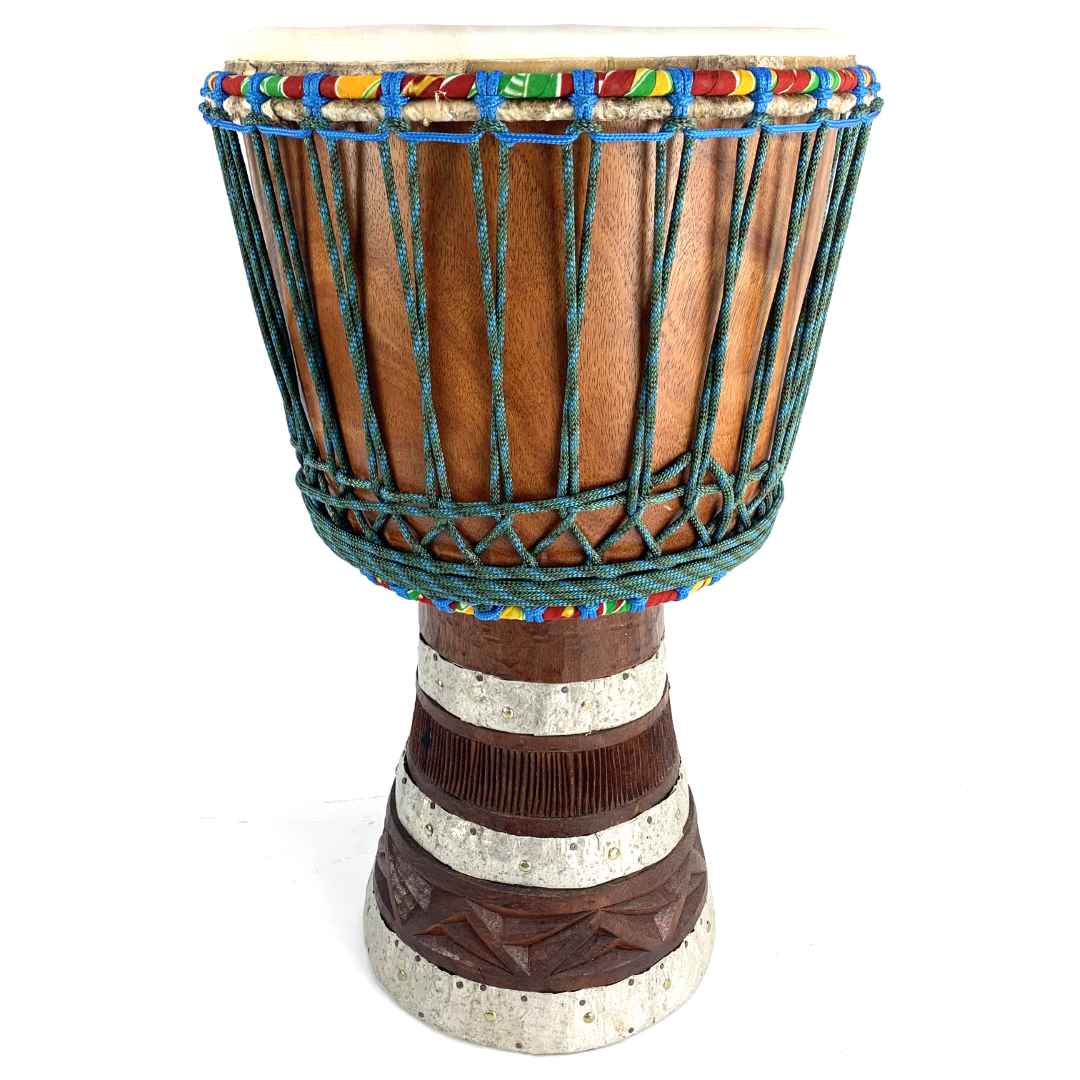
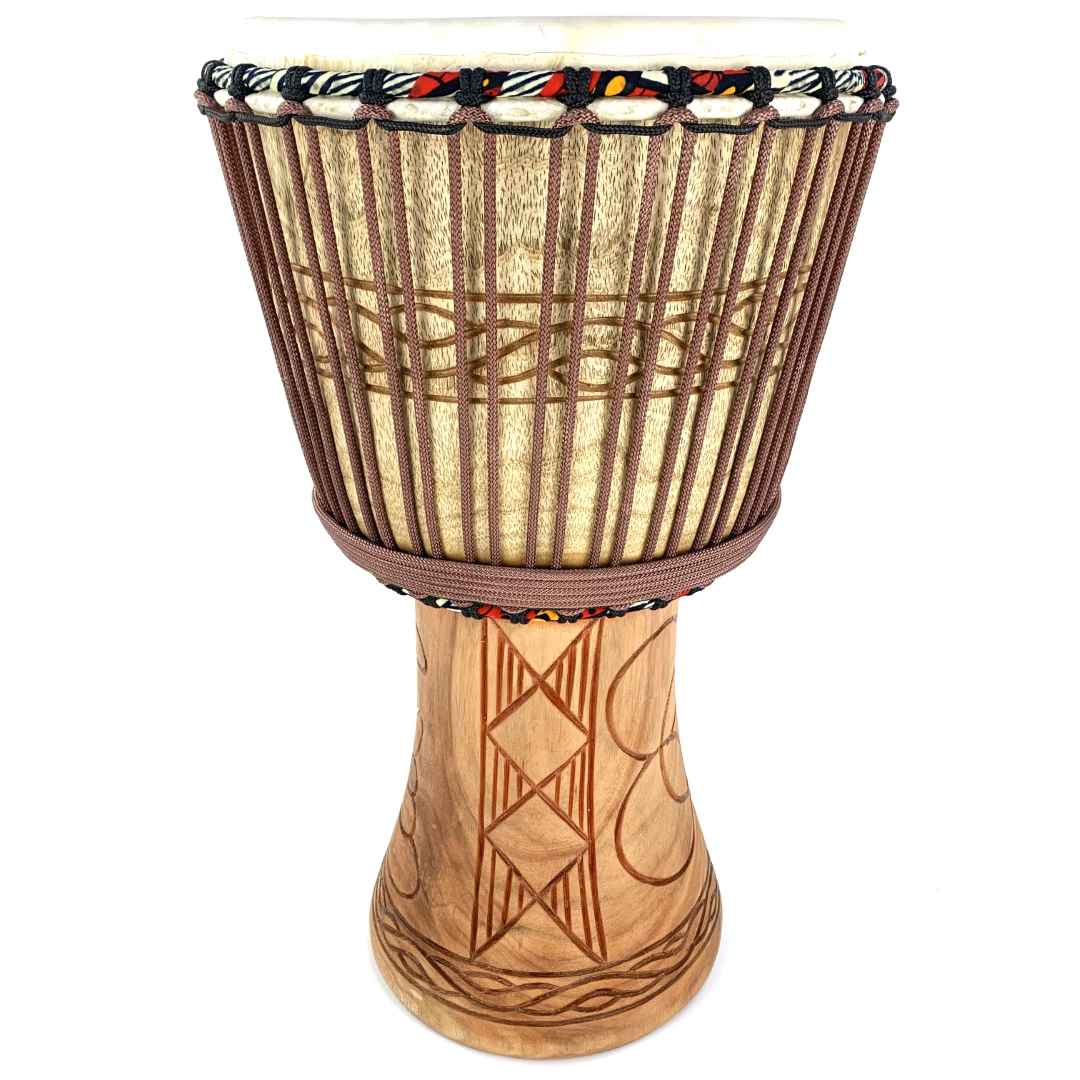
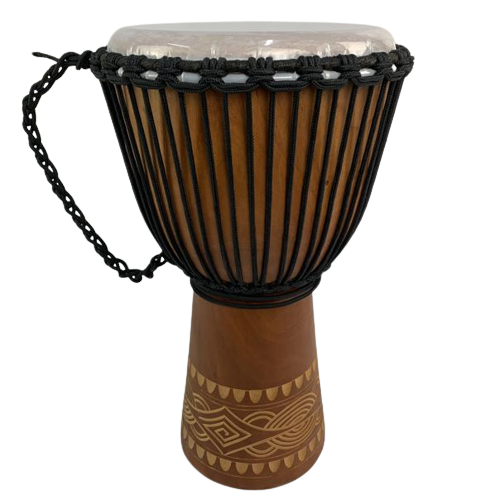
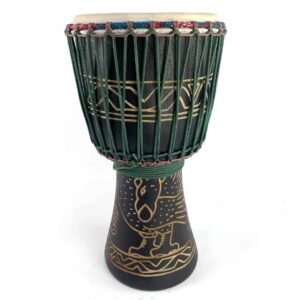
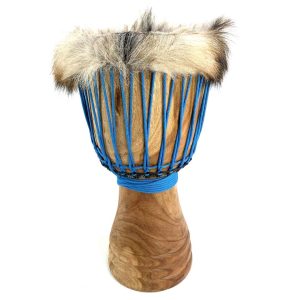
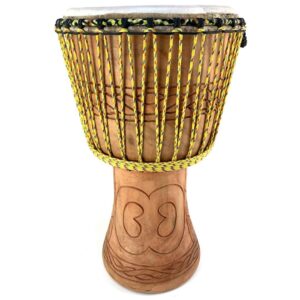
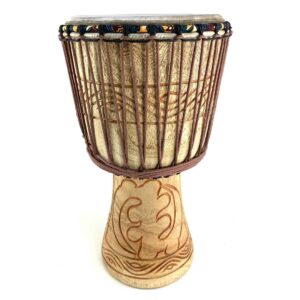
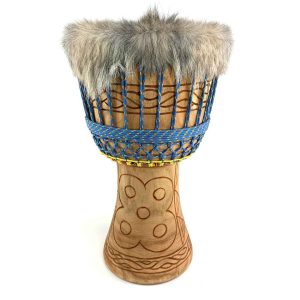
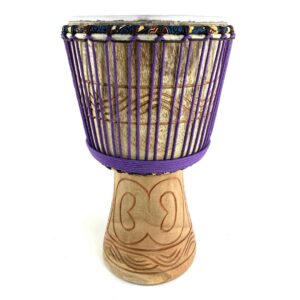
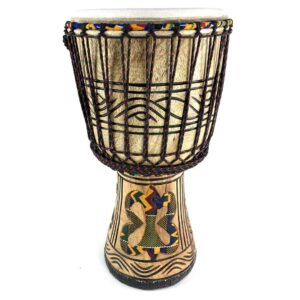
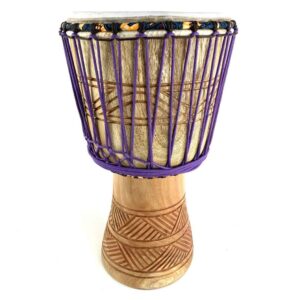
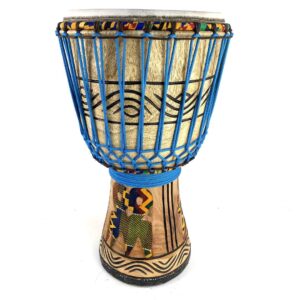
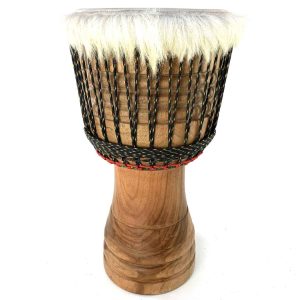
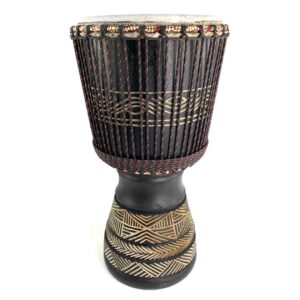
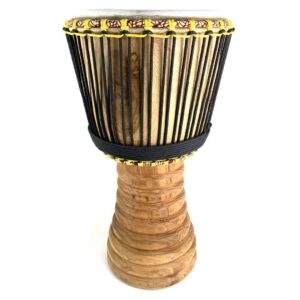
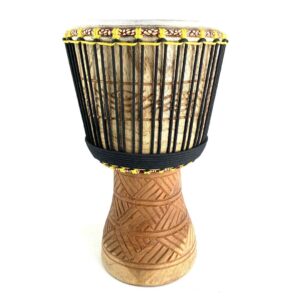
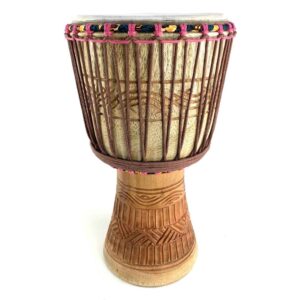
Our Ghana djembes are the most popular in our African drum collection. There’s nothing like a djembe from the motherland!
Made in Ghana from Twenaboa timber with natural goat skins, they are lighter in weight and easy to play. Available in sizes from 10″–15″, with a mix of traditional and contemporary carvings.
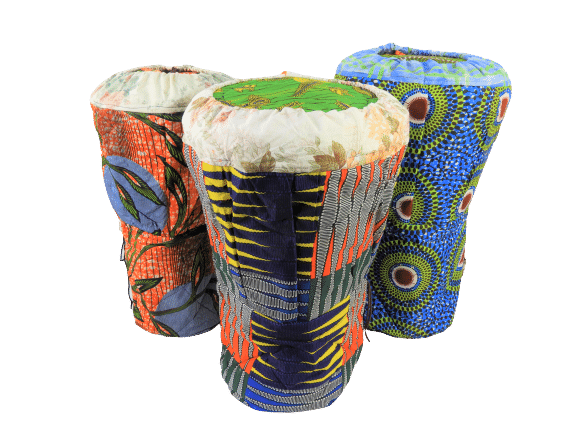
Every Ghana djembe includes a free padded cloth bag made in Ghana.
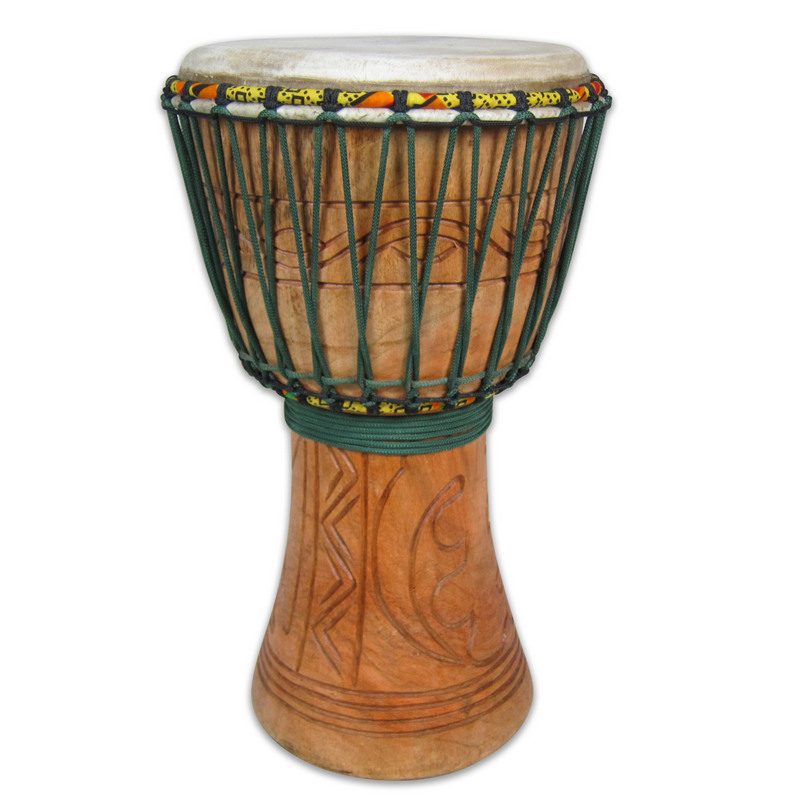
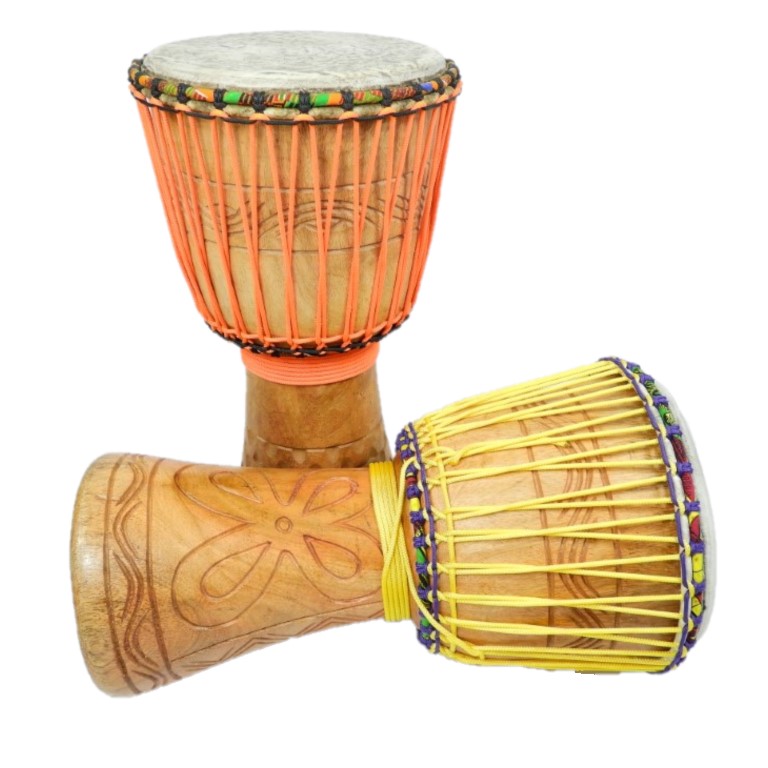
A Ghana djembe is carved from Twenaboa, a medium-density timber that makes it lighter weight and lower-priced than a Primo djembe. Ghana djembes are recognised for their Adinkra symbol design carvings and strong bass notes.
Primo djembes are carved from dense West African hardwoods such as lenke and khadi, which give a wider tonal range and more projection.
Purists and professionals play hardwood djembes, as the projection and clarity of a hardwood drum are superior to softer timbers.
Above the Primo range, Master djembes are hand-picked for symmetry from master carvers in Guinea, Mali, Burkina Faso, and Ivory Coast, with shells carved almost entirely from heartwood.
A Ghana djembe is the most popular first drum for players who want a djembe hand-carved in West Africa.
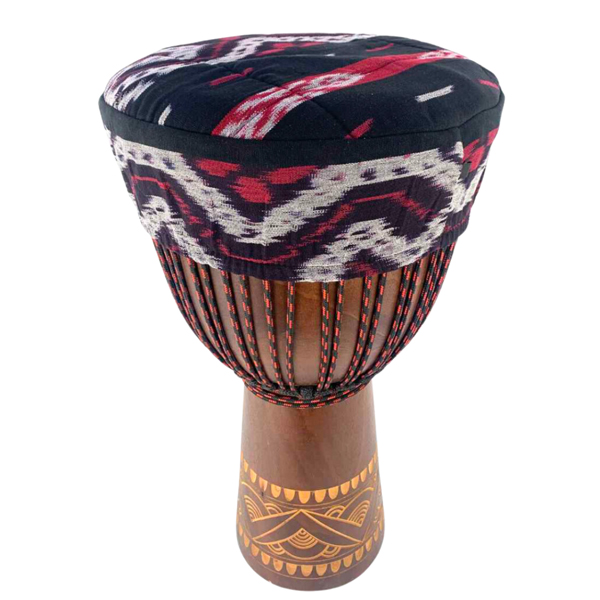
If budget comes first, an Indo djembe is the most affordable adult option.
If you’re starting out, choose a thin or medium goat skin, which is easier on the hands. Most of us start with a Ghana djembe and gradually migrate to the hardwood djembes as our ear becomes more attuned to the nuances of the djembe sounds.
A Ghana djembe is hand-carved in West Africa from Twenaboa timber and features a range of external carving design features.
An Indo djembe is made by our team in Indonesia from sustainably sourced mahogany. Indo djembes are consistent, forgiving, and usually the lowest price.
For every Ghana djembe sold, a hardwood tree is planted in Ghana through the NGO Denyigba Lorlor.
Twenaboa (Cordia millenii) is a medium-density West African timber, lighter than the hardwoods used for Guinea and Mali djembes. In Ghana it is also carved into many of the local indigenous drums including the Ga kpanlogo and Akan atumpan.
Because Twenaboa is more porous than hardwood, Ghana shells get extra coats of high-quality Danish oil in the building phase.
Ghana djembes start in the Brong Ahafo region, where the Twenaboa is sourced and the raw shells are carved. African Drumming has worked with three drum-makers, Moses, Yaw, and Panii, since 1998.
We select timber from the carvers in the bush and look for the harder sections, which always produce denser, stronger shells. The shells are refined and carved in Accra, then skinned, roped, and tuned in the Melbourne workshop.

The djembe is not indigenous to Ghanaian culture. It comes from the Mande peoples of Guinea and Mali, and has become a big part of Ghana’s contemporary ensembles, used as a solo drum in conjunction with local drums such as the kpanlogo.
Ghana’s own drum-making shows in the timber: Twenaboa is also used for the kpanlogo and atumpan, the Akan talking drum.
Ghana djembe carvings are completed in Accra, and the carvers choose their own designs.
Some use Adinkra symbols, the Akan symbols that stand for proverbs and ideas, and others prefer abstract geometric patterns.
Some Ghana shells are also inlaid with Kente cloth.
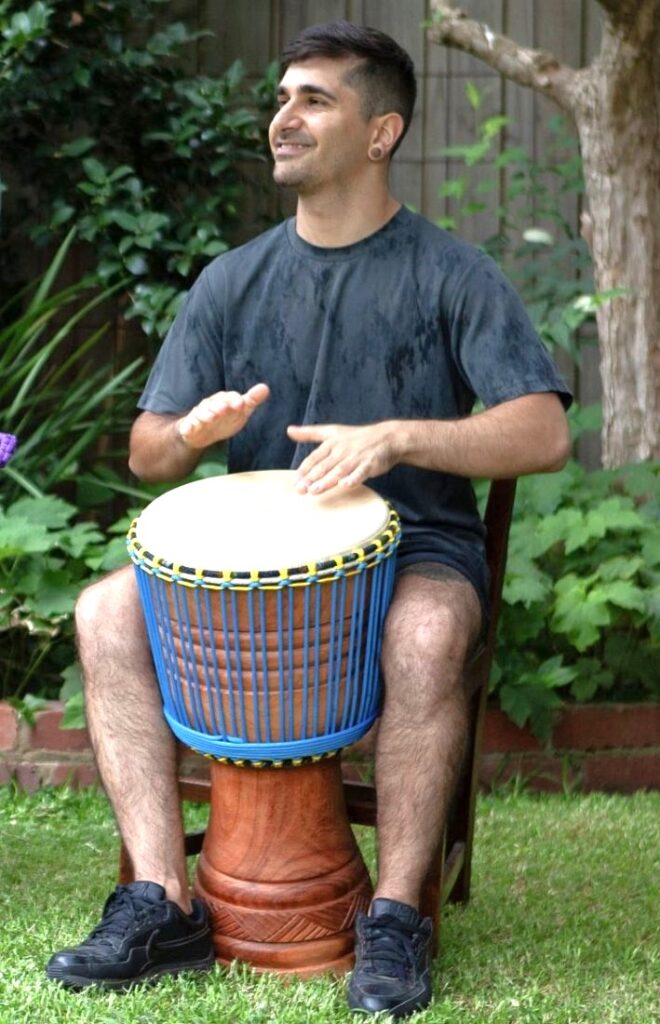
Ghana djembe size comes down to your height: when you sit to play, the rim should be a couple of inches above your thigh.
As a guide:
Most adults suit an 11.5″ to 14″ head, and a wider head gives more bass and more room for larger hands.
Younger players usually start on an Indo djembe, and teenagers from about 14 move up to a full-size Ghana djembe.
The djembe buyer’s guide covers chair height, skins, and sizes for younger players, or send us your height and budget and we’ll reply with three personalised video picks.
A Ghana djembe arrives tuned for the climate it’s headed to, with a padded djembe bag sewn by tailors in Accra, and a care and tuning guide.
It also comes with free lifetime tuning at the Melbourne studio. The shell is covered by a lifetime structural warranty, and the natural skin by a 5-month graduated warranty.
Our djembes are hand carved in West Africa, mainly in Guinea, Mali, Ivory Coast, Burkina Faso, and Ghana, by master artisans who’ve learned their craft over generations.
We then complete the rope work, tuning, and skin fitting in Australia to ensure every djembe meets our sound and build standards.
We also offer an Indonesian range, made to our specifications for consistent tone and finish, providing an affordable option for all ages and sizes, including for schools, workshops, and community use.
Choosing a djembe depends on a few key factors: your height, experience level, and the type of sound you prefer. Here’s a quick way to think about it:
Height: Taller players are usually more comfortable with larger djembes (around 65 cm +), while shorter players often find mid-sized drums easier to handle.
Sound: Harder woods like Lenke and Khadi produce deeper, more resonant tones, while lighter woods like Twenaboa have a softer, warmer voice.
Exprience: Beginners often start with our Indo or Ghana ranges, while advanced players love the master and primo djembes in the African hardwood series.
You can find more detailed tips and comparisons in our Djembe Buyer’s Guide.
We use sustainably sourced hardwoods such as lenke, khadi, and iroko, paired with premium goat or cow skins depending on the desired tone.
Our ropes are high-tensile and durable, and every component is chosen to enhance longevity and sound quality.
Yes. Our shells are covered by a lifetime structural warranty under normal playing conditions.
View full info on our Drum warranties Here.
We ship across Australia and internationally. Most orders are dispatched on the same day, so you can expect a quick turnaround.
Delivery to metro areas in Australia usually takes 2–5 business days, with regional areas taking a little longer. We also offer express shipping options if you need your order sooner.
For international orders, delivery times depend on your location and the shipping option you choose at checkout.You’ll receive tracking details once your order is on its way. You can find more information on shipping timeframes and options here, or feel free to contact us for help estimating delivery to your area.
Hit enter to search or ESC to close