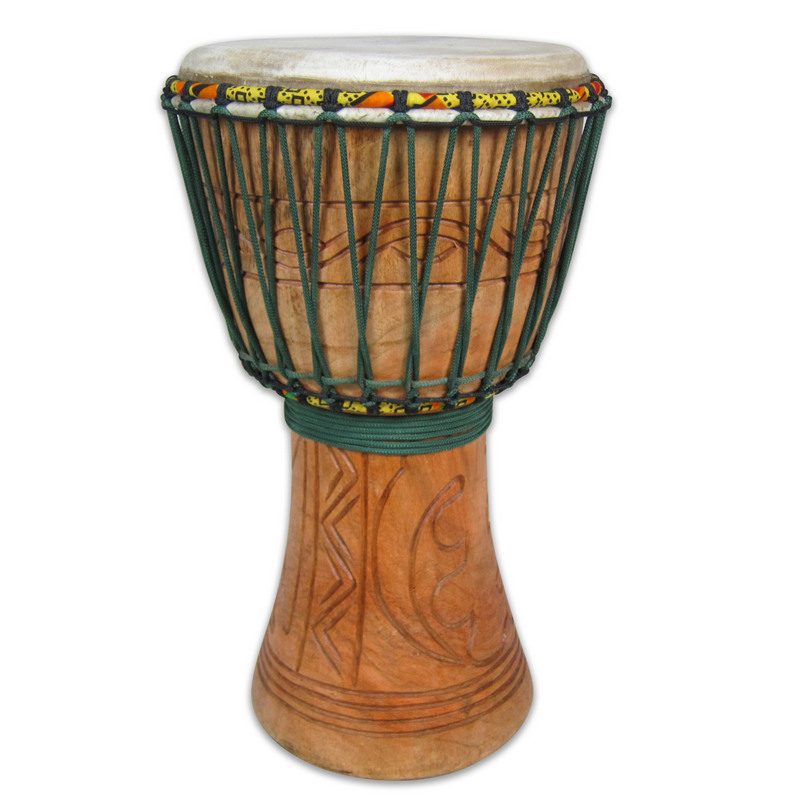
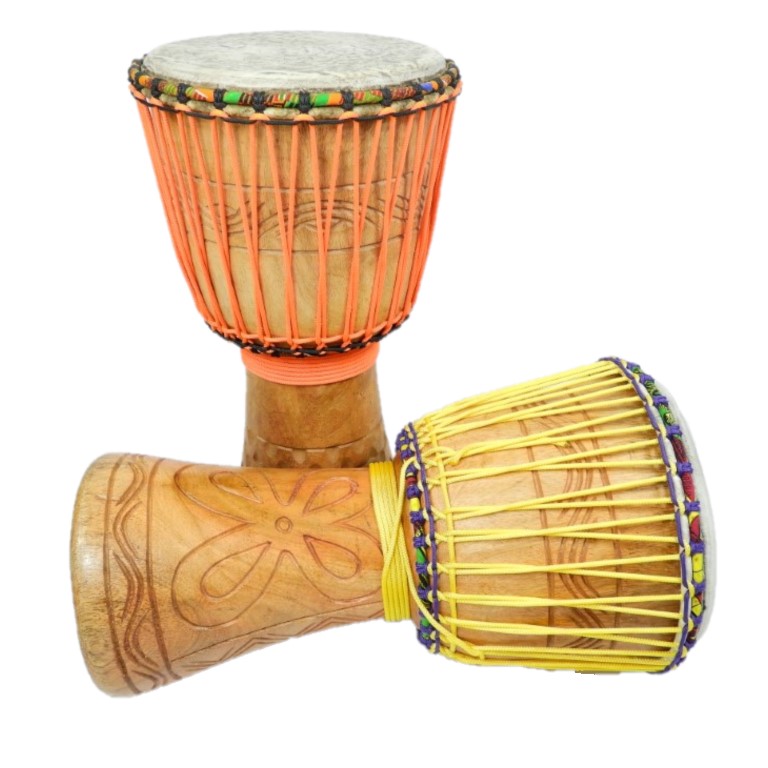
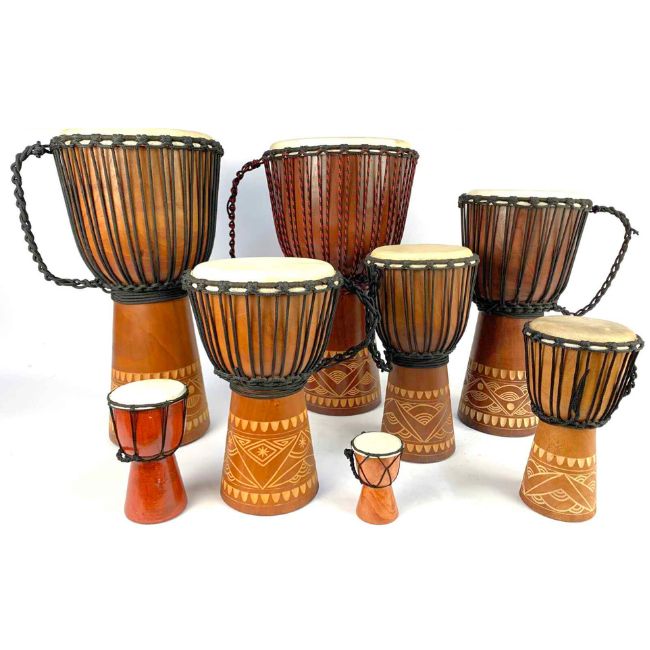
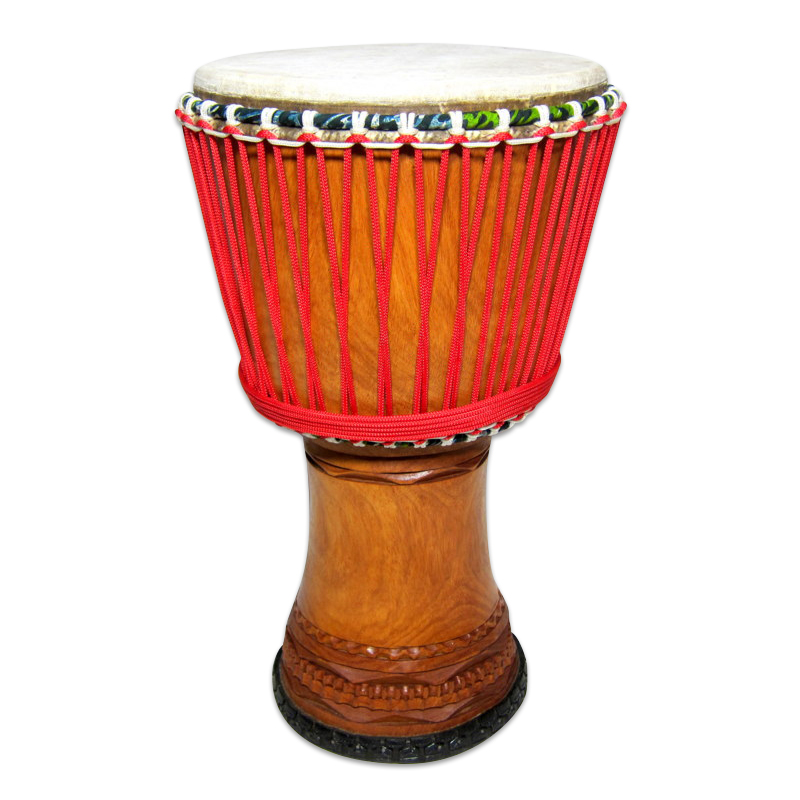
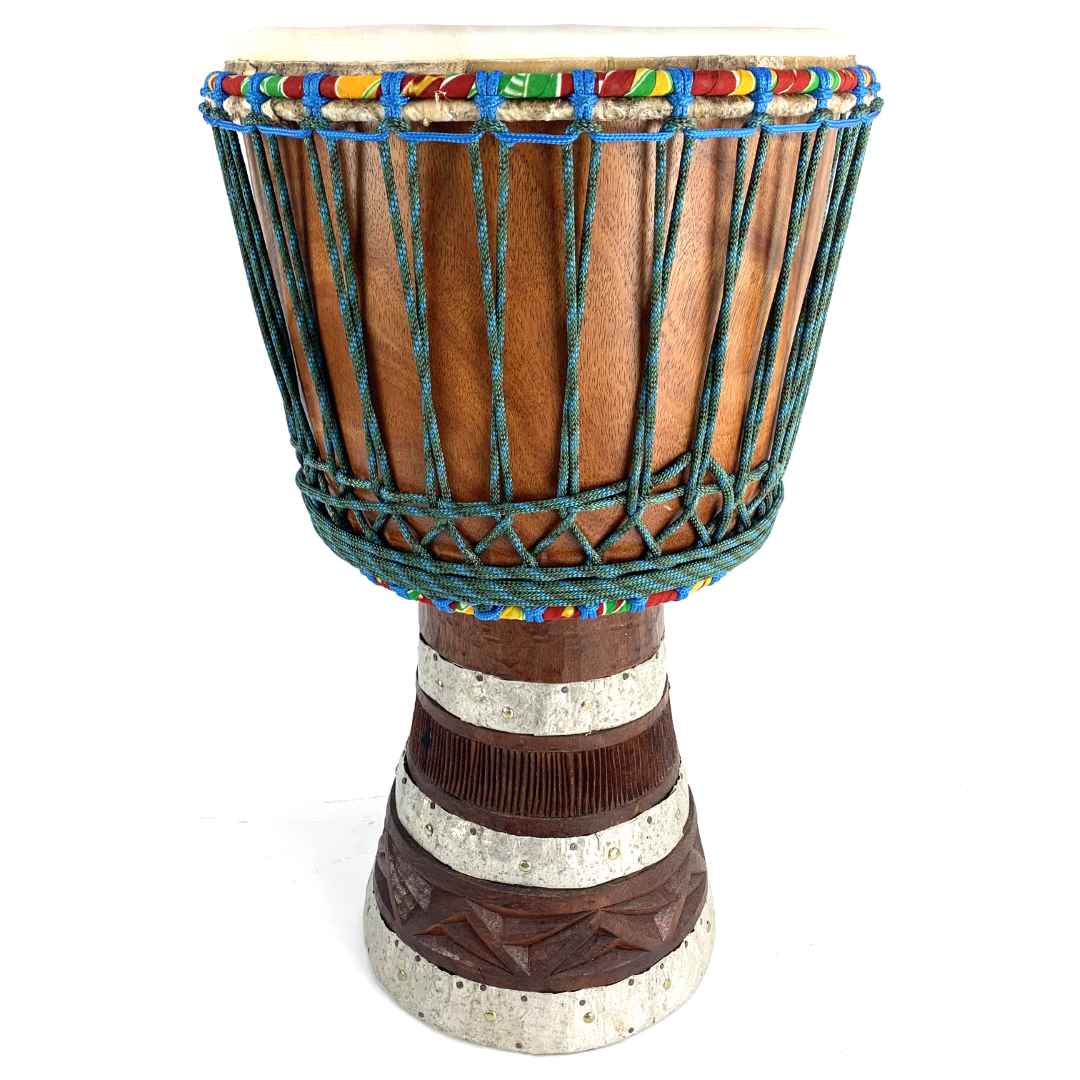
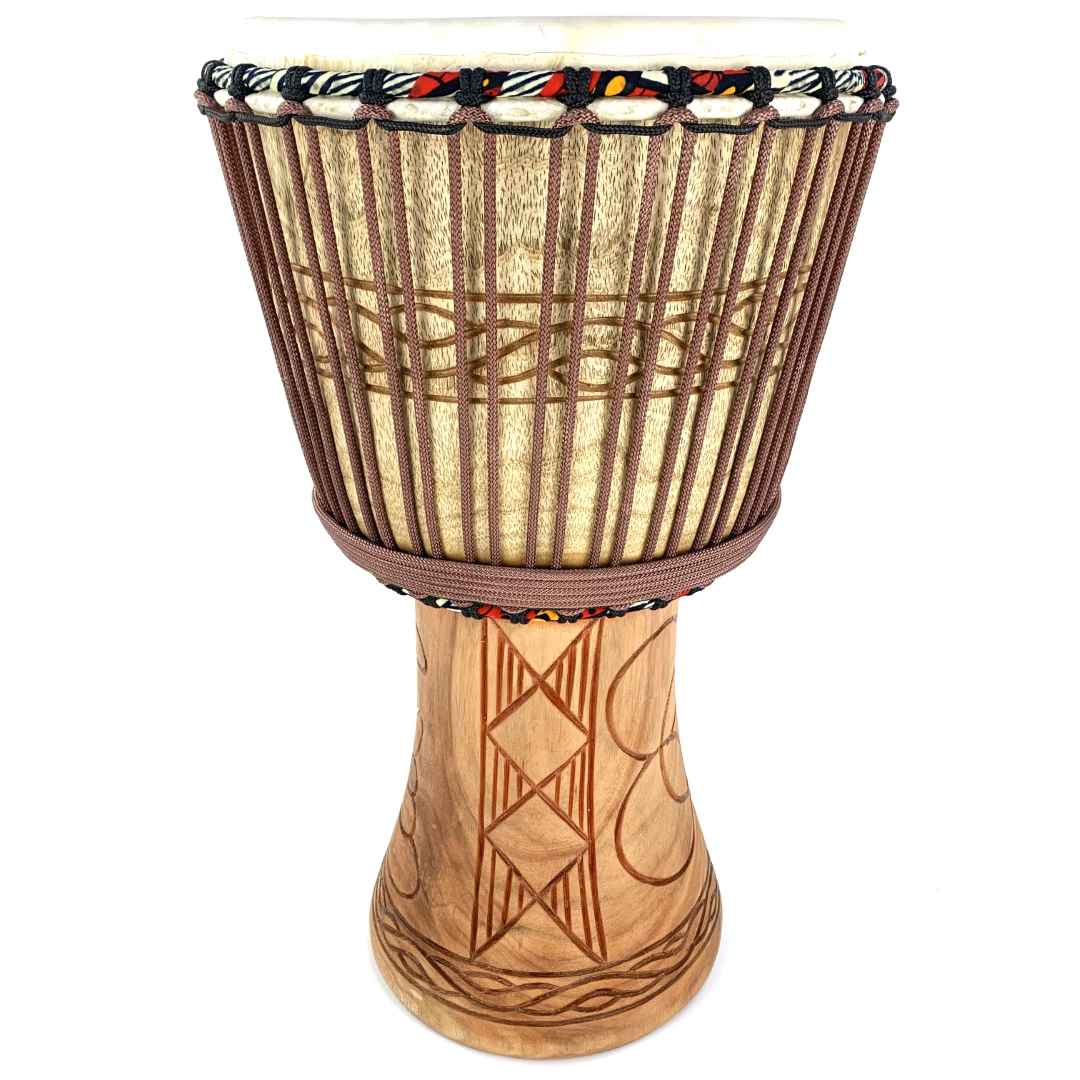
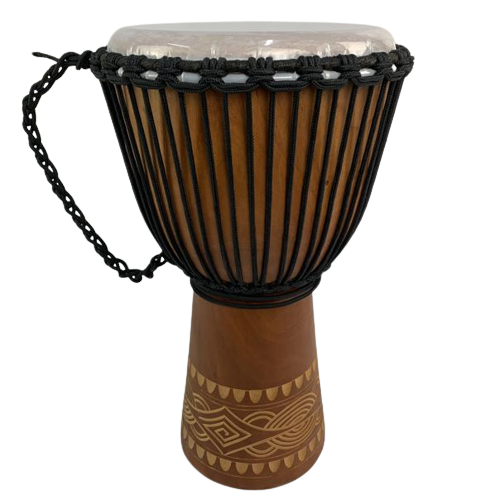
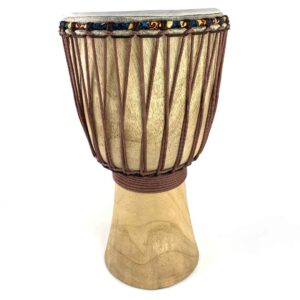
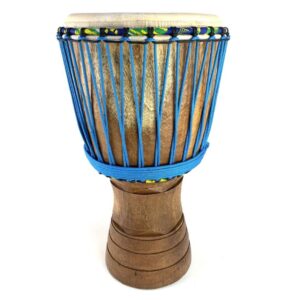
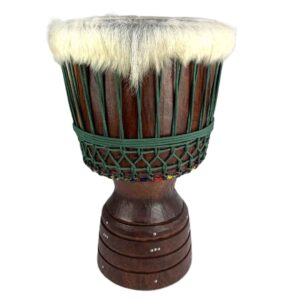
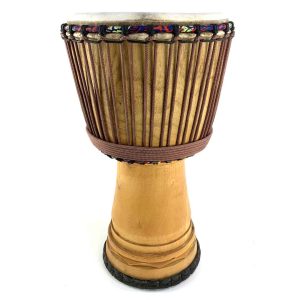
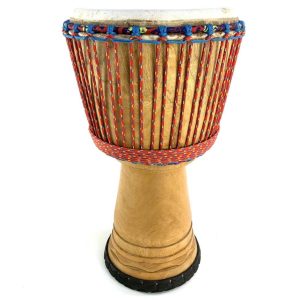
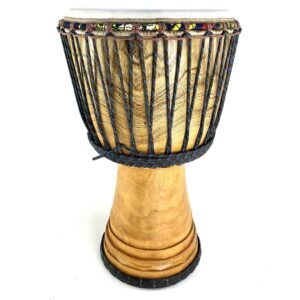
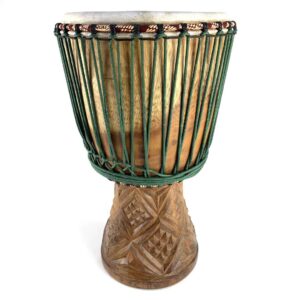
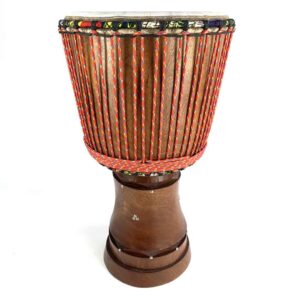
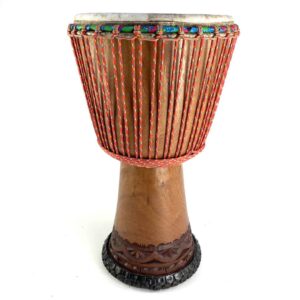
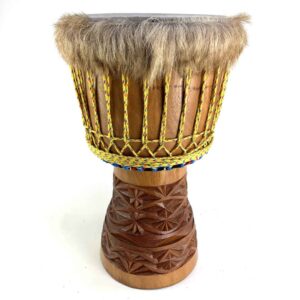
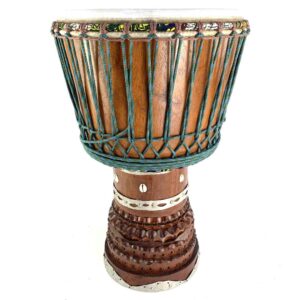
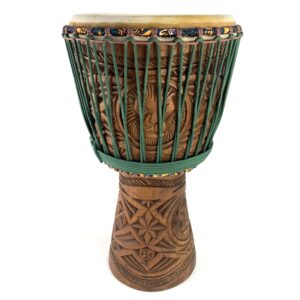
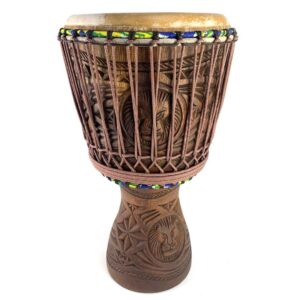
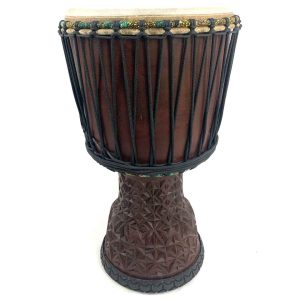
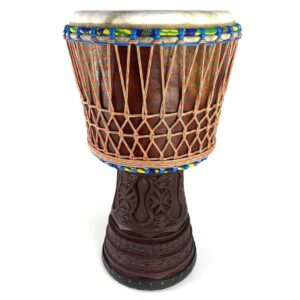
Our primo series djembes are the first tier in the West African hardwoods.
The dense hardwood shells produce a rich, deep sound that is instantly noticeable.
Each djembe receives extra attention to the playing edges and outer shell, ensuring they are both comfortable to play and visually appealing. These high-quality djembes offer a full range of pure tones and come in various shapes, sizes, and unique characteristics. The timbers used in this range include dense Lenke, Djala, Khadi, as well as Melina (Golden hardwood) and Iroko.
A Primo hardwood djembe is the first tier of West African hardwood drums, carved from dense timbers such as lenke, djala, dougarra, khadi.
Also included are lighter weight hardwoods like Iroko and Melina
Ghana djembes are carved from medium-density Twenaboa, so they’re lighter, with a strong bass at a lower price.
A Primo gives more projection and a wider tonal range.
Primo and Master shells use the same West African hardwoods, but Master shells are picked for symmetry, structural and aesthetic perfection, and are carved almost entirely from heartwood, the dense inner core of the timber, which gives them their tonal range.

Hardwood djembe timbers differ in weight, sound, and feel:
If you’ll be carrying your drum to classes, iroko and melina are the lighter options.
The djembe has at least 800 years of recorded history, originating from the ancient Mande empire, and the shapes and styles of drums have changed and evolved over the years, even within each country:
Choosing a Primo djembe starts with size: when you sit to play, the rim should be a couple of inches above your thigh, and most adults suit an 11.5″ to 14″ head. Then choose the skin. If you’re still building technique, a thin or medium goat skin responds with less effort, while thicker goat and cow skins have more complex tones and suit experienced players with toughened hands.
Every Primo djembe listing includes a video of its bass, tone, and slap.
See the djembe buyer’s guide for the full height chart, or send us your height and budget and we’ll reply with three personalised video picks.
Primo djembes are hand-carved in Guinea, Mali, Ivory Coast, and Burkina Faso by master carvers African Drumming has sourced from directly since 1998.
In Conakry, Guinea, Abdulai specialises in the external design finishing and carving. Ousmane is one of our long-standing Ivory Coast carvers.
In Burkina Faso, master carver Yecou sources his timber from the Banfora region in the country’s southwest.
Every shell is then skinned, roped, and tuned in the Melbourne workshop.
A Primo djembe is carved from one solid piece of West African hardwood, with extra work on the playing edges and outer shell so they play easily and hold a high finish.
The skin is chosen to balance the timber: Mali goat has a drier, crisper sound and plays in quickly, while Australian goat is thicker and oil-rich, takes longer to play in, and holds up well through changing weather.
Every drum is roped with low-stretch rope in the Mali weave so the tuning holds, and most have a rubber tread around the base cushions the drum and stops it slipping.
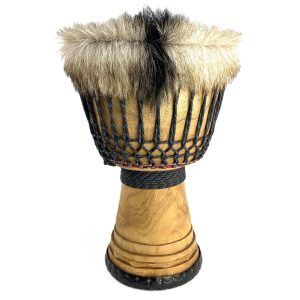
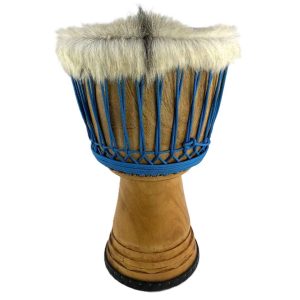
Some Primo djembes have hair-on overlap skins, a visual finish that doesn’t change the sound.
A Primo djembe shell is covered by a lifetime structural warranty under normal use.
The natural skin has a 5-month graduated warranty: full repair cover in the first month, then part cover through to five months. Natural skins vary, and a hidden flaw usually shows within five months, which is why the warranty runs to that point.
Damage from misuse or accidents isn’t covered, and the drum warranty page has the full terms.
A Primo djembe ships free worldwide and arrives tuned for the climate it’s headed to, with a free drum care and tuning guide.
It also comes with free lifetime tuning at the St Kilda studio.
Hit enter to search or ESC to close