

We recommend using good quality headphones for all our sound grabs they’re recorded at high fidelity for your listening pleasure!
Need more info or guidance? Get in touch with our team for personalised advice. We’re known for our quick replies!
Chakra guide
Bowl
Size
Overtone
Chakra
1
9cm (3.6″)
D7 (2229Hz)
Crown / Sacral
2
10.5cm (4.1″)
A6 (1740Hz)
Navel / Third Eye
3
12.5cm (4.9″)
E6 (1294Hz)
Solar Plexus
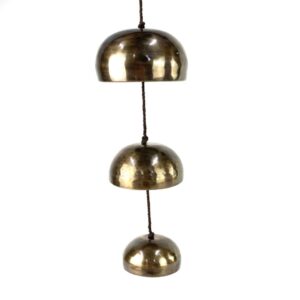
These singing bowls have extremely high resonance and a beautiful, complex sound. Strike the edge of the bowl or the side for different timbres of the full chord, or slowly circle around the lip with the mallet to resonate the base note.
Smaller bowls sing at higher frequencies with cleaner sounds – great for clearing the middle and upper chakras. Larger bowls create a deeper sound which clears the middle and lower chakras. Combine bowls of different sizes to enter a rich, healing soundscape.
Some practitioners believe certain frequencies can target specific parts of the body, enabling the healing of certain ailments. If you want to work with specific chakras, you can choose a bowl based on its tonal frequencies.
Please note that the striker colours may vary.
Our list below suggests frequencies for the different chakra centres.
Can’t find the frequency on the list? If you halve or double a frequency, it gives the same note an octave down or up: try doubling or halving your frequency until it falls in one of the ranges below. See examples:
Crown: 229.5-249.5Hz | Third Eye: 204-229.5Hz
Throat: 187-204Hz | Heart: 172-187Hz
Navel: 153-172Hz | Sacral: 136-153Hz
Base: 124.5-136Hz
Example 1: Take 108Hz. 108 x 2 = 216Hz … Third Eye Chakra.
Example 2: Take 972Hz. 972 / 2 = 486HZ. 486 / 2 = 243Hz … Crown Chakra.
Product Specifications
Material: five-metal alloy
Bowl sizes: 9cm (3.6″), 10.5cm (4.1″), 12.5cm (4.9″)
Full drop length: 35cm
Weight: 0.9kg
Included: striker
Shipping & Returns
We dispatch most orders on the same day and ship across Australia and worldwide. Metro deliveries in Australia usually arrive within 2–5 business days, and express options are available at checkout; regional and international timeframes depend on the destination. You’ll receive tracking details when your parcel is on its way.
Need to return your order? Let us know within seven days of delivery. Please keep the item unused and in its original condition. Full details are in our Shipping & Returns policy.
Reviews
FAQs
Which chakras does this hanging bowl set cover?
This set spans three points, Crown, Navel and Solar Plexus. Playing from the 9cm bowl down to the 12.5cm gives a falling run through that sequence, moving from higher energy centres down toward the body’s core.
Do different sized singing bowls make different sounds? Yes. Smaller singing bowls sing at higher pitches with a brighter, cleaner tone, while larger bowls give a deeper note with longer sustain. This hanging singing bowl set runs through three sizes from 9cm to 12.5cm, so it steps from a bright D7 on the smallest bowl down to E6 on the largest. African Drumming records a high-fidelity sound sample of the set, so you can hear this exact one on the product page above.
How do you play a hanging singing bowl set?
Strike the rim of each bowl with the striker, or circle the rim slowly to build a sustained note. Because the bowls hang free rather than sitting on a cushion, you can play them one at a time or let two ring together. Playing top to bottom, from the 9cm bowl down to the 12.5cm, gives a falling run of notes..
How do you care for hand-hammered singing bowls? Keep hand-hammered singing bowls dry and store them indoors. The alloy holds its tone best when it’s kept away from damp and knocks, so avoid letting the bowls clash together when you move the set. Wipe with a soft dry cloth if they need cleaning..
What instruments pair with a hanging singing bowl set?
Chimes, gongs, and steel tongue drums all pair well with this set.
The three tones run from D7 down to E6, so a gong adds low sustain the bowls don’t reach while chimes bring brightness above them. Many people open and close a session on the bowls and layer the others through the middle.
Many practitioners use bowls to open or close a session, then add layered textures with complementary instruments.
Combining tones can deepen relaxation and create a fuller soundscape.