

We recommend using good quality headphones for all our sound grabs they’re recorded at high fidelity for your listening pleasure!
Need more info or guidance? Get in touch with our team for personalised advice. We’re known for our quick replies!
Product Specifications
Timber: Mahogany
Made in: Indonesia
Played with: Two 30cm wooden strikers (pair included)
Small: 15cm diameter, 41cm height, 1.8kg
Medium: 17cm diameter, 51cm height, 3kg
Large: 18cm diameter, 59cm height, 3.5kg
As each krin is hand carved, dimensions vary slightly.
Shipping & Returns
We dispatch most orders on the same day and ship across Australia and worldwide. Metro deliveries in Australia usually arrive within 2–5 business days, and express options are available at checkout; regional and international timeframes depend on the destination. You’ll receive tracking details when your parcel is on its way.
Need to return your order? Let us know within seven days of delivery. Please keep the item unused and in its original condition. Full details are in our Shipping & Returns policy.
Reviews
FAQs
What is a krin drum?
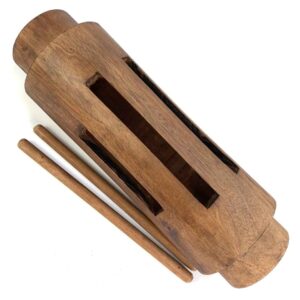
The krin is a slit drum, a form found across many cultures. This style is well known among the Malinke (Mande) people of the mountain regions of Guinea, where it plays in West African percussion ensembles alongside djembe, dunun, balafon and kora.
In West African ballet it carries a sharp, cutting line that sits above the drums.
Two wooden strikers play the krin, one in each hand. The lips on each side of the slit are different thicknesses, so striking the edges, the ends and the body gives you a set of distinct pitches from one instrument, rather than a single repeated note.
Players use it for interlocking patterns and accents.
Which size krin drum should I choose?
Size sets the pitch: small is highest and brightest, large is deepest; medium sits between the two. The medium size is the most versatile if you’re starting out, and players building a section often take all three for a wider range.
How many notes does a krin drum make?
One krin sounds several distinct pitches. The lips on each side of the slit differ in thickness, so striking the edges, ends and body gives a range of tones from a single drum, rather than one repeated note.
How do I care for a krin drum?
Mahogany is stable, but keep the krin out of direct sun and away from heaters so the timber doesn’t dry out or crack. A wipe with a dry cloth keeps it clean, and it needs no tuning.